

20 Indian Army personnel, including Colonel B Santosh Babu, the Commanding Officer of the Army’s 16 Bihar Regiment made supreme sacrifices protecting the border of our nation on night of 15 June in violent clashes with Chinese troops in the Galwan valley of Ladakh.
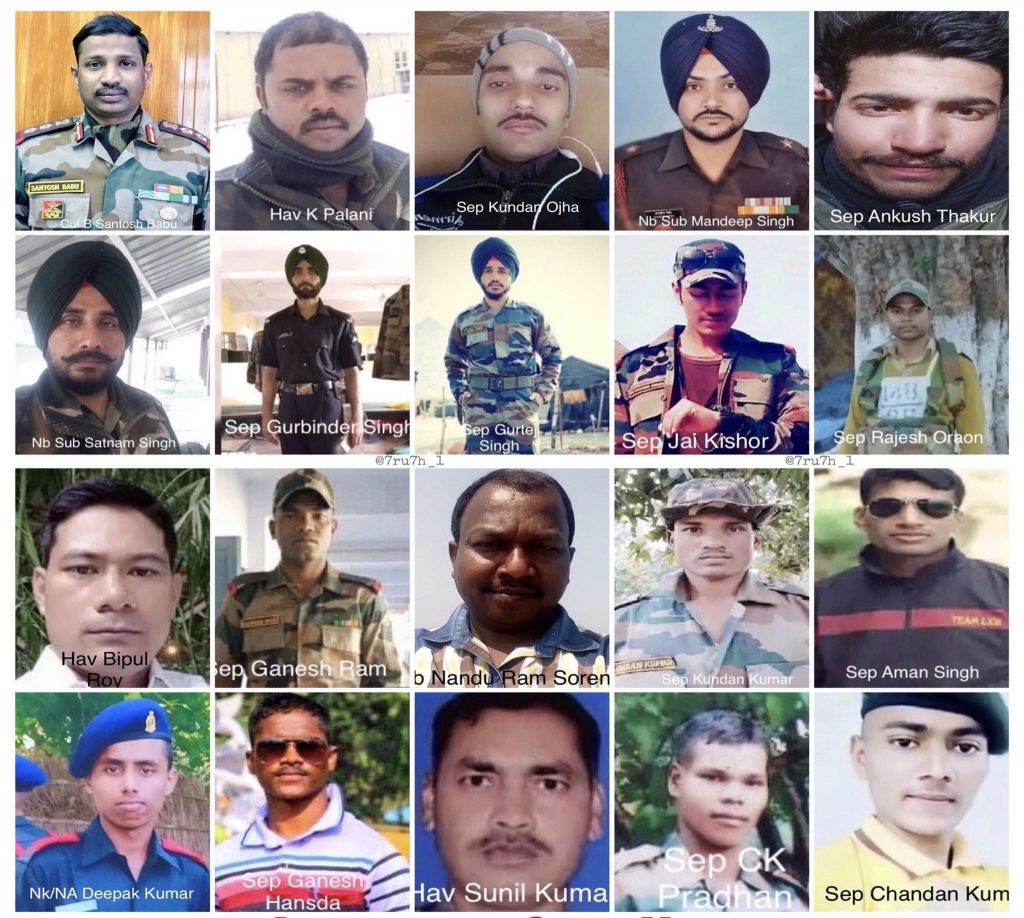
On 15 June, Indian soldiers had been waiting since morning to ensure that China’s People’s Liberation Army (PLA) troops fall back to a post, five kms to the east of Galwan valley, which was as per the disengagement plan decided in Chushul meeting on 6 June. Colonel B Santosh Babu, Havildar Palani, and Sepoy Ojha had gone unarmed to talk to Chinese side, when PLA attacked them with iron poles and stones. Chinese probably calculated that the soldiers who had come with their colonel would run away in fear watching their leader fall. Instead, soldiers of 16 Bihar Regiment roared like lions to charge on Chinese ignoring the fact that they were outnumbered many times by them. Battle went on for several hours. By the morning, it was confirmed India lost its 20 brave hearts. China also lost its soldiers, but they didn’t reveal number of casualties on their sides officially.
When nation is bidding adieu to its valiant soldiers with moist eyes and heavy heart, some political leaders and self proclaimed liberal Journos are rejoicing as if it is not our nation, India, has lost its heroes but BJP, the ruling party, lost its 20 party workers. Do they even realise their pathological hatred for PM Modi is extending to their abhorrence for nation? One look at martyrs’ pictures gives impression as if they are asking from such ungracious citizens, “Are you living the life worth of our sacrifices?“ The Telegraph mocked India घर में घुसकर मारा, which means they attacked you in your home.
Daulat Beg Oldi—which has an airstrip at an altitude of 16,614 feet, one of the world’s highest airstrip—is India’s northernmost military base located in Ladakh. It is 8 km south of the Chinese border. In 2001, Indian government first announced to construct a motorable road from Leh to its destination at Daulat Beg Oldi.

Border Roads Organisation, an arm of the ministry of defence, is the in-charge of building 255 km-long the strategic Darbuk-Shyok-Daulat Beg Oldie (DSDBO) Road. The road has been in the making for over two decades, but special focus was laid on the project after the Narendra Modi government came to power in 2014. Despite China’s heavy objections, BRO aims to complete work on the strategic DSDBO road by the end of this year as it reduces the travel time between Leh and Daulat Beg Oldi to six hour. Building roads in the most remote and vulnerable area along the LAC in Ladakh by India has infuriated China, as the road would boost India’s capability to move army and materiel rapidly in case of a conflict.
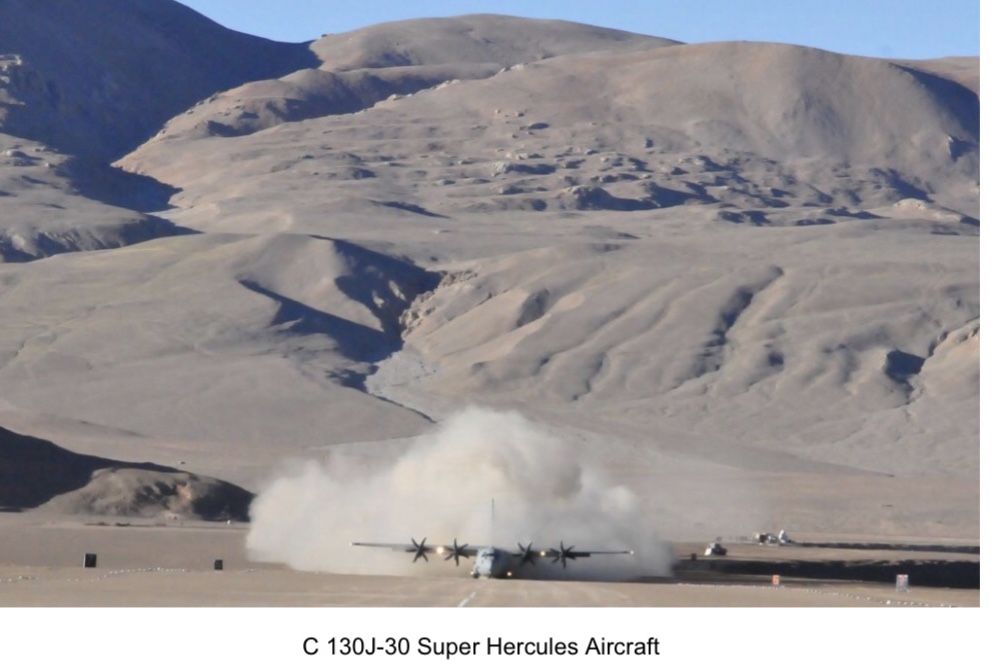
The western region of the Daulat Beg Oldi is where China touches Pakistan in the Gilgit-Baltistan area, where it is constructing a China-Pakistan Economic Corridor (CPEC) in the region. One can imagine why China is panicked at India growing stronger strategically. But, why are some Indian leaders and jounos rejoicing martyrdom of indian soldiers?
